Frederick Douglass Said 'This Fourth Of July Is Yours, Not Mine'
Frederick Douglass Said 'This Fourth Of July Is Yours, Not Mine' In 1852 – Here's Why His Speech Still Hits Today
- Douglass confronted the contradiction between America's ideals and the reality of slavery for millions of Black people.
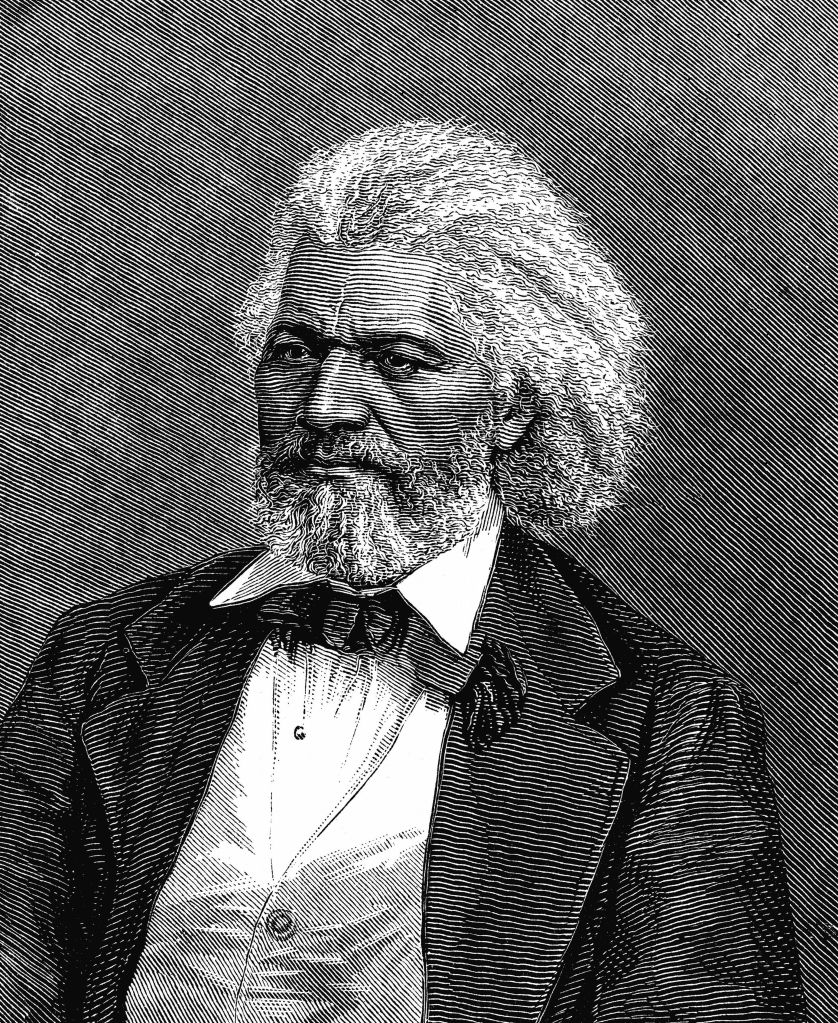
For many Americans, the Fourth of July is synonymous with fireworks, backyard barbecues, and celebrating the nation’s independence. For many Black families, the holiday is also a time to gather with loved ones, honor tradition, and create joyful memories. But as grills fire up and families reunite this Independence Day, the words of abolitionist Frederick Douglass’s iconic 1852 speech continue to offer a powerful historical lens that has resonated for generations.
“This Fourth of July is yours, not mine. You may rejoice, I must mourn.”
Frederick Douglass’s Fourth Of July Speech: Why it still hits today.
Douglass delivered those unforgettable words in 1852, during a speech in Rochester, N.Y., after being invited by the Rochester Ladies’ Anti-Slavery Society to reflect on the meaning of Independence Day. Born into slavery in Maryland before escaping to freedom, Douglass became one of the nation’s most influential abolitionists, writers, and orators. His speech, commonly known as What to the Slave Is the Fourth of July?, confronted the contradiction between America’s founding ideals of liberty and the reality that millions of Black people were still enslaved. More than 170 years later, it remains one of the most studied speeches in American history.
Although slavery ended more than a century ago, many of the questions Douglass raised about freedom, equality, and citizenship continue to shape national conversations today, particularly as debates around civil rights persist.
The life and liberty promised at America’s founding has not always been fully accessible to many Black Americans, from the justice system to voting rights. Black Americans remain disproportionately represented in the nation’s prison system. While Black people make up roughly 13% of the U.S. population, they account for more than one-third of the incarcerated population, according to federal data from the Prison Policy Initiative. Studies and reporting show that Black folks are more likely to be wrongfully convicted, stripping family members away and weakening their futures.
Voting rights have likewise remained at the center of ongoing legal and political debates. In April, the U.S. Supreme Court issued a ruling in Louisiana v. Callais, narrowing how Section 2 of the Voting Rights Act can be applied in cases involving congressional redistricting. The decision marked a significant shift in one of the country’s key tools for challenging racial vote dilution and sparked widespread discussion about the future of voting rights protections.
At the same time, changes in education and workplace policy have also reshaped the landscape in recent years. The Supreme Court’s 2023 decision ending affirmative action in college admissions, followed by the scaling back of Diversity, Equity and Inclusion (DEI) initiatives beginning in 2025, has raised concerns among advocates about potential new barriers to opportunity for Black Americans.
Black Americans are still fighting in the face of adversity.
Still, the story is not defined by setbacks alone. We’re still fighting today.
There are also clear signs of progress and resilience. According to a Pew Research Center analysis of government data released in February, nearly 28% of Black adults ages 25 and older had earned at least a bachelor’s degree by 2024, almost double the share in 2000, and the numbers are rising, a tool that will open up endless career opportunities for the next generation. Black entrepreneurship is also growing at a historic pace, with the number of Black-owned employer businesses increasing by 62% between 2017 and 2023, according to Brookings. Today, more than 5 million Black Americans own businesses that generate hundreds of billions of dollars in revenue and employ millions of workers.
We’re building our own incomes and realizing that we hold the power to change our future. Despite social and political challenges, Black Americans continue to build, create, and push forward across industries, communities, and generations because we know we deserve freedom, too.
For historians, educators, and community leaders, revisiting Douglass’ speech each Fourth of July is not about diminishing the holiday, but about expanding its meaning. His words remain a reminder that the promise of American freedom has not always been experienced equally, and that the nation’s history contains both progress and struggle.
That perspective has helped keep Frederick Douglass’ Fourth of July speech alive across generations. His speech continues to be taught, referenced, and reflected upon as an invitation to consider both how far the country has come and the work that has shaped its journey.
As millions gather around picnic tables this Fourth of July, Douglass’ words remain as relevant as ever, encouraging celebration alongside reflection, and reminding us that patriotism, truth, and change must be reflected on to build a brighter future for Black America.
SEE MORE:
Of Course Trump Undermined The Civil Rights Act Ahead Of MLK Day
Should Black America Still Celebrate July 4th Or Juneteenth Only?
Frederick Douglass Said 'This Fourth Of July Is Yours, Not Mine' In 1852 – Here's Why His Speech Still Hits Today was originally published on newsone.com